

Why Serious Artists Still Need Play.

“Every child is an artist. The problem is how to remain an artist once we grow up.”
There is an odd, quiet space that exists between childhood and adolescence. It’s where we begin to lose that uninhibited gift of imagination. Perhaps it’s the shift in our bodies, a growing awareness of the world, or simply the weight of society’s expectations settling in—telling us which roles to play and exactly how to play them.
From Survival to Studio
This month, we are diving deep into play, because it is the heartbeat of a sustainable creative practice. Last week, we explored play on a cognitive level—how it is hardwired into our survival as humans. Today, I want to get specific about how play functions in the studio and why it must be a non-negotiable part of your routine.
Play is not separate from “serious” work; it is what makes serious work possible. As psychologist Mihaly Csikszentmihalyi noted in his research on “flow,” our most meaningful moments occur when we are voluntarily stretching our abilities. To create, we must break out of established patterns (Edward de Bono) and be willing to let go of certainty (Erich Fromm).
In this light, play isn’t indulgent—it is the practice of staying open.
LE Creative Hour is a reader-supported publication. To receive new posts and support my work, consider becoming a free or paid subscriber.
The Quiet Geometry of Play
In the studio, play is rarely loud. It is inward, often unseen, and shielded from the pressure of an audience. As Agnes Martin famously said, “I paint with my back to the world,” reminding us that the best discoveries happen away from the stage of performance.
Play is where we loosen our grip on “correctness.” It is the space Corita Kent described where “there’s no win and no fail, there’s only make.” It is where instinct takes over, rules soften, and the visible begins to meet the invisible. Not everything we make in play is meant to be shown, but every discovery made there changes the work forever.
Turning Your Studio into a Playground
Whether it’s experimenting with a new medium or making “mistakes” just to see where they lead, play is the laboratory of the soul. Last week, I mentioned how the Pixar campus is designed as one giant playground for its animators; your studio should serve that same purpose for you.
To help you get started, here are five studio play practices designed for artists and creatives in any field.
Here are five completely new play studio practices that both artists and creatives in any field can engage in.
5 Studio Play Practices for Serious Creatives
The Material Conversation: Instead of deciding what to make, let the material lead. Pick one thing—charcoal, paper scraps, or clay—and spend 20 minutes manipulating it without a plan. Fold it, tear it, or stack it.
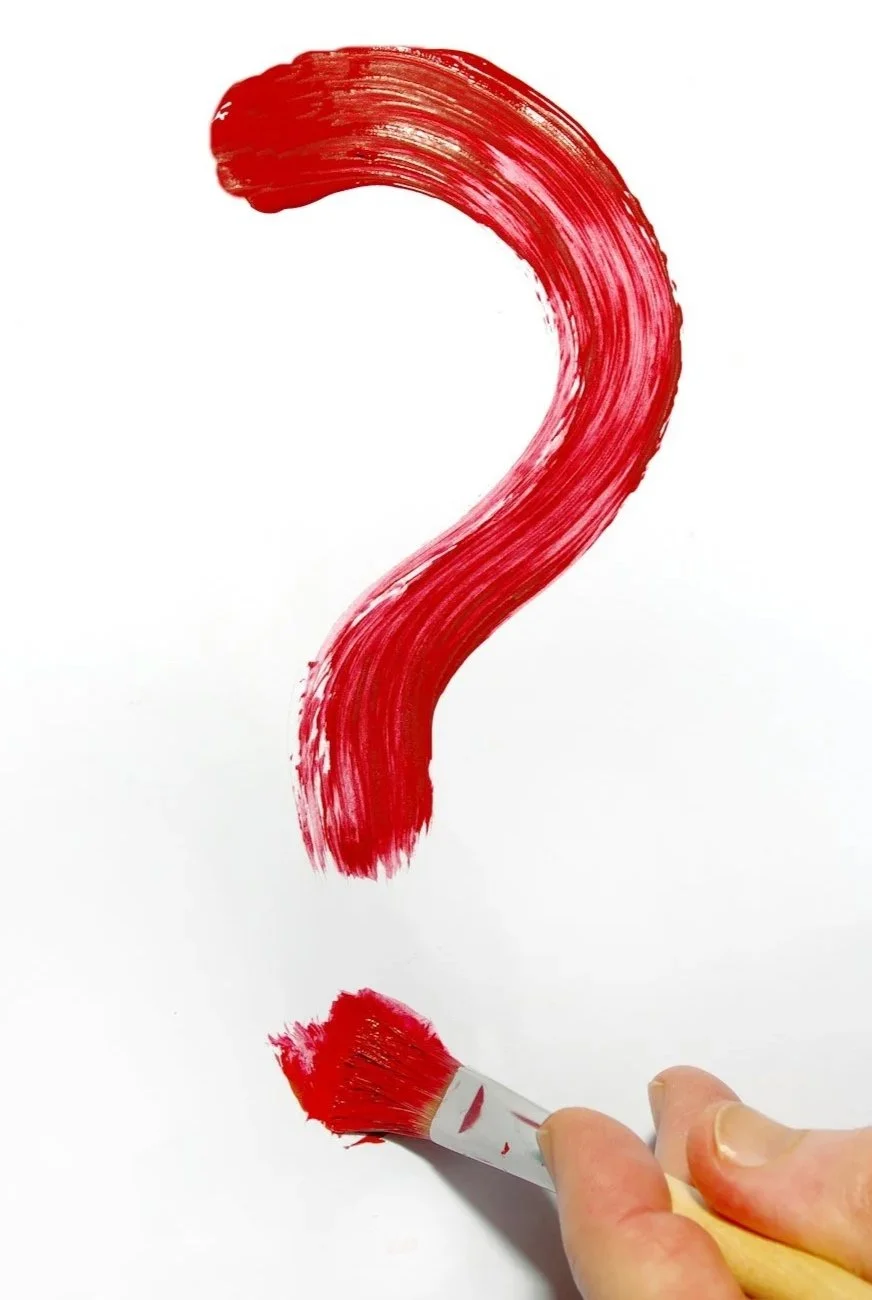
Play Insight: Play begins when control loosens, and curiosity takes over.The “One Question” Project begins with a question instead of a desired outcome. What does calm look like in color? What happens if I repeat this mark 100 times? Your only job is to explore the question, not to find a “correct” answer.
Play Insight: Questions keep creativity alive longer than answers do.
3. The Sensory Reset: Translate a non-visual sense into your medium. Use a specific smell, a texture, or a memory of a sound as your only reference point. Paint the feeling of rain on your skin or write the texture of rusted metal.
Play Insight: When creativity reconnects with the body, originality returns.
4. The Studio Wander: Give yourself permission to “forage” in your own workspace. Pick up objects that usually go unnoticed—old sketches, dried paint tubes, or forgotten books. Combine two unrelated items and respond to the “collision” they create.
Play Insight: Play often begins with rediscovery.
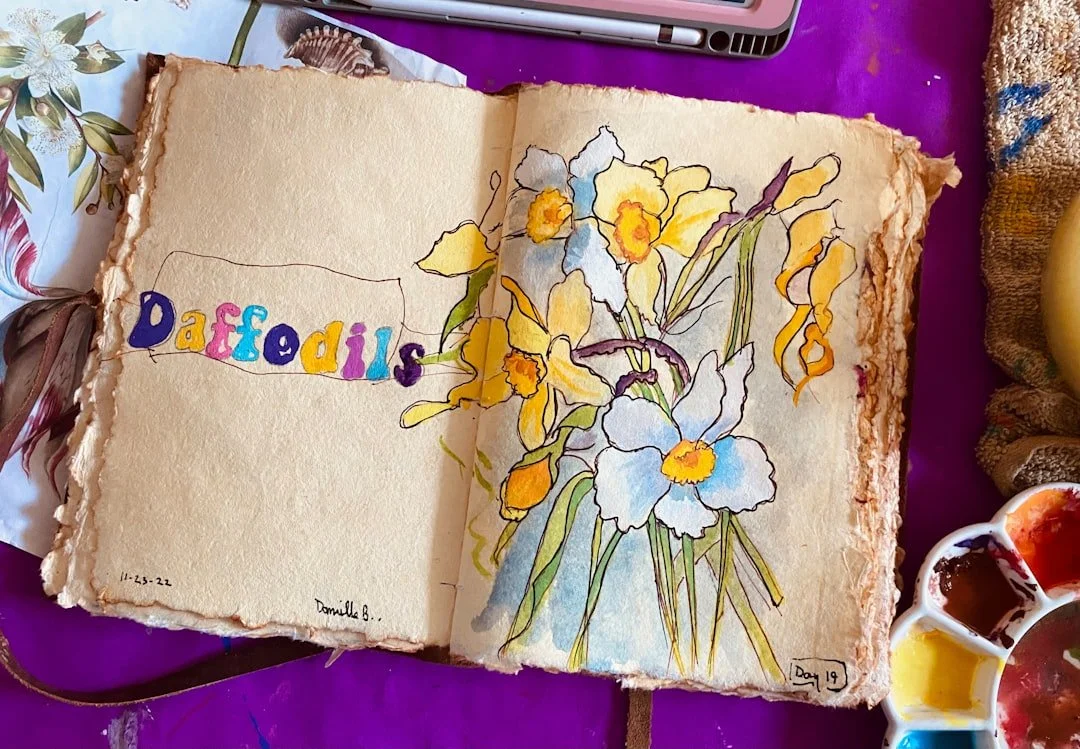
5. The Dialogue Piece: Treat your work as a conversation between different versions of yourself. Make a mark or write a sentence, wait 30 seconds, and then respond to what you just created. Repeat for several rounds.
Play Insight: Creativity exp
Picasso was right: the problem is how to remain an artist. The solution, however, is simpler than we think. It’s found in the quiet, messy, and 'unproductive' moments of play. It’s in the material conversation and the sensory reset. It’s in the brave act of being a beginner again. Your studio is your playground—don’t forget to actually go out and play.
I’d love to hear from you: Which of these 5 practices resonates most with your current creative season? Or is there a "play" ritual you already swear by? Let’s chat in the comments.